
Driving global impact through education and collaboration: empowering sustainable development in emerging economies
Across the globe, universities play a vital role in tackling today’s most pressing challenges, ranging from climate change to youth employment and sustainable food systems. The Maastricht School of Management’s (MSM) Expert Centre on Emerging Economies (ECEE) contributes to this mission by combining education, capacity building, and research to strengthen higher education systems and promote sustainable development in emerging economies.
Through a growing portfolio of international projects, MSM’s ECEE translates academic knowledge into practical solutions for societal impact. The recently started Erasmus+ project “Greening Ethiopia – towards a more climate responsive higher education system in support of sustainable agriculture and energy in Ethiopia” is a leading example of this approach.
Greening Ethiopia: empowering universities for a climate-responsive future
Started in January 2026, the four-year Greening Ethiopia project will strengthen the capacity of Ethiopian universities to lead the country’s green transition. Ethiopia faces complex challenges related to climate change, land degradation, and energy access. Universities can play a transformative role, not only through teaching and research, but also by modelling sustainable practices themselves.
Under the lead of MSM, the project brings together the Ethiopian Ministry of Education and four public universities: Assosa University, Bahir Dar University, Haramaya University, and Mekelle University, alongside European partners Università Cattolica del Sacro Cuore (Italy) and the International Hellenic University (Greece). Together, they will integrate sustainability into higher education policy, operations, and curricula.
As project coordinator, MSM is leading overall management, quality assurance, and sustainability development. The project team develops sustainability assessment tools with a leading role for the Maastricht Sustainability Institute (MSI), support curriculum renewal through problem-based learning, and ensure that outcomes are embedded institutionally and shared widely. Building on decades of MSM’s experience in Ethiopia, the initiative reflects how education, capacity building, and research come together to generate lasting societal impact.
Education and capacity building for inclusive growth
Beyond Greening Ethiopia, MSM implements projects that empower students, educators, businesses and institutions to become drivers of inclusive development. A clear example is the K2K Burundi project (funded by the Rijksdienst voor Ondernemend Nederland (RVO), which strengthens entrepreneurship education in five Burundian universities. By training lecturers, revising curricula, and linking academia with the private sector, the project is transforming universities into engines of innovation and job creation.
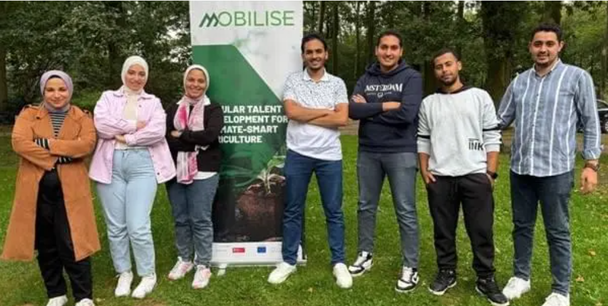
Similarly, the MOBILISE project, financed by the European Commission’s Migration Partnership Facility, explores circular talent development between Europe and Africa. By piloting circular talent development pathways that strengthen climate-smart agriculture in Europe, Tunisia, Egypt, and Ethiopia, the project demonstrates how education and skills development can address both local and global challenges.
Through such initiatives, MSM’s ECEE supports universities in developing practice-oriented programmes that enhance employability, foster entrepreneurship, and build institutional resilience, ensuring that education translates directly into societal progress.
Research and international collaboration
Research and collaboration lie at the heart of MSM’s ECEE approach. Working closely with ministries, universities, and industry partners, MSM connects European expertise with local innovation to co-create sustainable solutions. This collaborative model ensures that results are evidence-based, context-specific, and aligned with long-term development priorities.
Projects like Greening Ethiopia, MOBILISE, and K2K Burundi exemplify how international cooperation contributes to achieving the United Nations Sustainable Development Goals (SDGs).
From empowering Ethiopian universities to embrace sustainability, to fostering entrepreneurship in Burundi and piloting new talent programmes across Africa and Europe, MSM ECEE’s projects demonstrate a shared vision: education as a catalyst for change.
Related news
How Triple Helix Partnerships are strengthening agricultural development in Rwanda
Opinion Column: Sustainability is happening