
How Triple Helix Partnerships are strengthening agricultural development in Rwanda
Strong partnerships are often discussed in theory, but what do they look like in practice?
At Maastricht School of Management’s Expert Centre on Emerging Economies (ECEE), Triple Helix Partnerships (THP), collaboration between academia, industry, and government, is the building block of our projects to support sustainable and inclusive economic development in emerging markets. Our latest factsheet Triple Helix Partnerships for innovation and economic development explain this approach in more detail.
A concrete example of this approach in practice can be witnessed in Rwanda, through the long-running initiatives such as Strengthening Education for Agricultural Development (SEAD), SEAD West, TMT+ Strengthening the sustainability of the Service, Innovation and Training Centres (STICs), and the STIC ecosystem scaling project. These projects, all funded by the Dutch Government, were intertwined and continuations of each other over the past 10 years.
Innovation is at the heart of economic growth, but innovation cannot happen in isolation, it requires integration and collaboration between partners. Hence, Triple Helix fosters economic growth by aligning research business, strengthening value chains and local clusters, and create sustainable platforms for long-term collaboration
Triple helix in action: The SEAD & SEAD West projects
Agriculture is the backbone of Rwanda’s economy, contributing roughly one third to the GDP and employing about 70% of the population. Yet, smallholder farmers and agribusiness often face limited access to modern skills, technology, markets, or finance. Curriculum reform alone is not enough to address these challenges, system-wide collaboration is needed to achieve real progress.
For nearly a decade, Rwandan and the Dutch government have worked together to support this transformation. Since 2015, the ECEE has been part of SEAD and involved in leading the development of an integrated approach to strengthen agricultural education, applied research, and innovation in Rwanda.
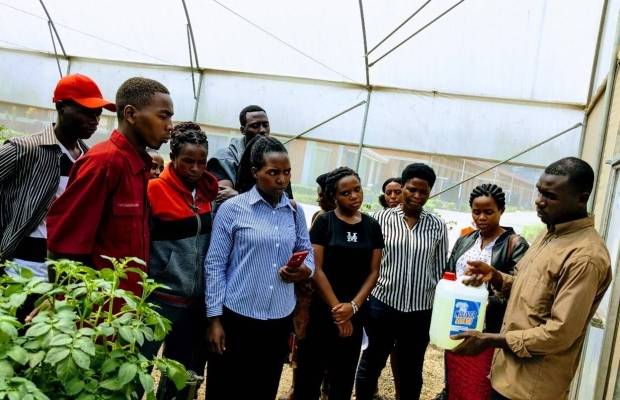
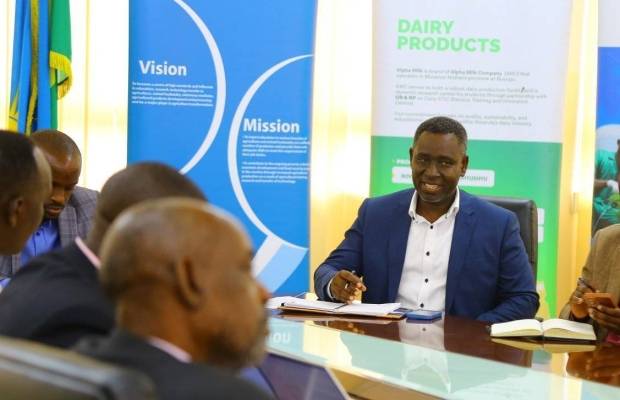
Central to this development is the establishment of five Service, Training and Innovation Centres (STICs) in the dairy, potato, poultry, horticulture, and agri-tourism value chains. Each STIC operates as a public-private partnership, functioning as a Triple Helix platform that connects education institutions, private sector actors, and public authorities to translate knowledge into practice.
Why the Rwanda STIC model worked: linking practice to Triple Helix expertise
The success of the SEAD and SEAD West projects is not coincidental, it directly reflects the Triple Helix expertise of MSM’s ECEE (outlined in our factsheet) and how it was applied on the ground in Rwanda.
This is visible across five key areas of Triple Helix development:
- THP readiness assessments: In Rwanda, MSM in collaboration with its project partners, began by assessing institutional capacities, stakeholder roles, and market needs across the agricultural education system. These assessments imposed the review and development of more than 30 curricula across higher learning polytechnics and TVET institutions, ensuring alignment with labor market needs and emerging agricultural technologies.
- Cluster development & value chain analysis: the project carried out value chain analysis to identify priority agricultural sectors where collaboration would maximize greatest impact. This approach then led to the creation of five STICs, in the fields of dairy, potato, poultry, horticulture, and agri-tourism.
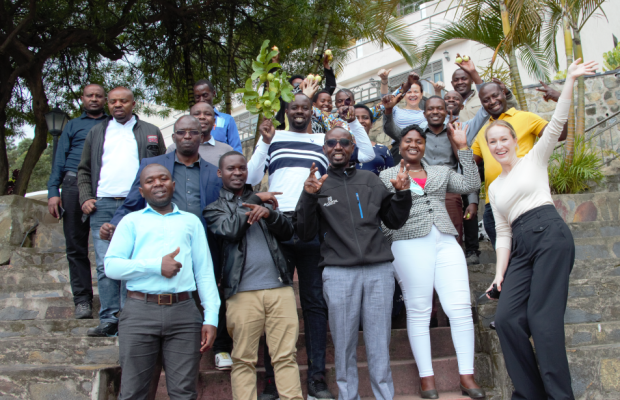
- Benchmarking & study visits: additionally MSM set up exposure visits to show international examples of Triple Helix collaboration, helping partners grasp how education, industry, and government cooperation can function in practice. In the Limburg region of the Netherlands, for example the Brightlands campuses were visited, which are innovation campuses where entrepreneurship and science come together. These exchanges helped build the design and implementation of STIC model.
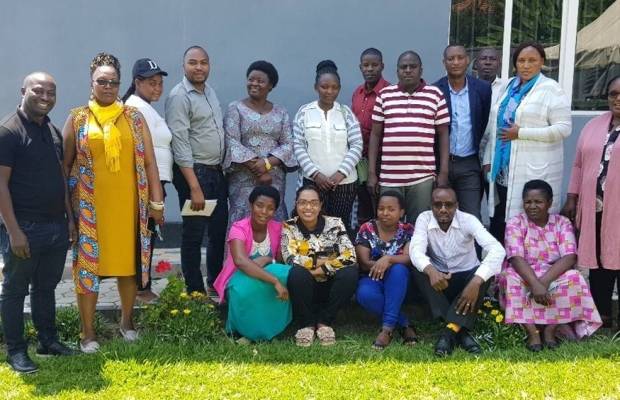
- Training & capacity building: Building sustainable partnerships required investing in people and institutions. Over 250 teachers were trained in pedagogy, competency-based education, applied research and innovation techniques and quality assurance. Leadership of Rwandan partner institutions was strengthened via several management and leadership programs, led by MSM’s ECEE. This capacity building approach on multiple levels and expertise is aimed at strengthened the capacity to sustain Triple Helix Partnerships.
- Hands- on THP development: The establishment of the STICs created public-private partnerships between Rwandan Polytechnics and companies such as Alpha Milk, Seed Potato Fund, Abusol Ltc, and Holland Greentech.
Outcomes of the long-term collaboration and investment in Rwanda
Through this integrated Triple Helix approach, the beforementioned projects delivered measurable outcomes across education, skills development and institutional strengthening in Rwanda. Over 2,000 students trained through practice-oriented curricula, while over 40,000 farmers gained access to production, processing and marketing practices. In parallel, 13 education institutions were upgraded with modern facilities and strengthened in governance quality assurance, and alumni monitoring, alongside the approval of eight new institutional policies covering applied research, gender inclusion, online learning, and entrepreneurship.
Looking ahead
Looking into the future, Rwanda represents just one of many contexts where Triple Helix Partnerships are being applied to address complex development challenges, while also moving into a new phase of its own. Building on the success of projects such as SEAD and SEAD West, partners are working to scale the STIC ecosystem, with a focus on strengthening national ownership, financial sustainability, and private sector engagement. The next step is integrating the STICs into national education and agricultural policies, developing viable financial models with local banks, and connecting centers to regional innovation. As the STIC ecosystem expands, the Rwanda SEAD and SEAD West initiatives offer a blueprint for applying Triple Helix Partnerships in other emerging market contexts.
Donor funded projects: The SEAD, SEAD West and TMT+ project was part of the Orange Knowledge Programme (OKP) which is funded by the Netherlands’ Ministry of Foreign Affairs and managed by Nuffic. The STIC ecosystem scaling project was funded by the Embassy of the Kingdom of the Netherlands in Rwanda.
MSM's Expert Centre on Emerging Economies
This institutional collaboration project is part of MSM's Expert Centre on Emerging Economies. The department is an expert centre on local economic development in emerging and developing markets. We capacitate managers and professionals from government, private sector, NGOs, and post-secondary education in Africa, Asia, Middle East, and Latin America. We offer consultancy and customized training programs, and we manage complex projects in key sectors, e.g. water, agriculture and health. For more information click here.
Related news
Beyond Tourism: Supporting Rwandan communities and experiencing its authentic countryside
Strengthening the Future of Rwanda’s STIC Ecosystem: Key Insights from the National Roundtable
Education, Research, and Enterprise: The Dairy STIC Model for Sustainable Dairy Growth in Rwanda
A Model for Sustainable and Innovative Potato Production in Rwanda