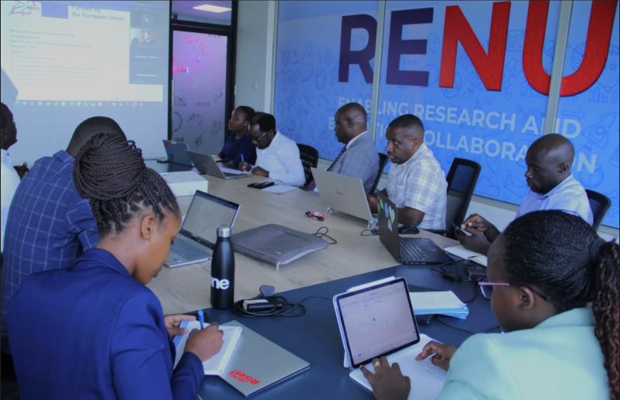

ODeL – UG project supports digital transformation to higher education in Uganda
Maastricht School of Management (MSM) is contributing to the Erasmus+ Capacity Building in Higher Education project ODeL - UG Enhancing Access and Quality of the Higher Education Landscape in Uganda through Open-Distance e-Learning, an initiative focused on strengthening Uganda’s higher education system through an open-distance e-learning.
Working alongside partners including RENU, the National Council for Higher Education (NCHE), Kabale University, Mountains of the Moon University, and the University of Lisbon, the project brings together academic institutions and national stakeholders to support the shift towards a more flexible and digitally enabled learning models.
Within the project, MSM leads the needs assessment on digital competencies and quality assurance, while supporting partner institutions in strengthening high-quality online and blended learning. It also contributes to knowledge exchange on innovative digital education approaches.
A key focus of the initiative is supporting partner institutions in assessing their current capacities in digital education and quality assurance, while strengthening their ability to design and deliver effective online and blended programmes. Through capacity building and mentoring activities, the project equips institutions with the tools and knowledge needed to respond to evolving educational demands.
The project fosters collaboration and knowledge-exchange between Ugandan and European partners, creating opportunities to share experiences, explore innovative teaching approaches, and strengthen long-term institutional cooperation.
This initiative marks an important step towards a more inclusive and future-ready higher education landscape in Uganda.
The project is funded by the European Union. Views and opinions expressed are however those of the author(s) only and do not necessarily reflect those of the European Union or the European Education and Culture Executive Agency (EACEA). Neither the European Union nor EACEA can be held responsible for them.
Related news: