
Transforming Agricultural Education in South Africa: From Colleges to Regional Hubs
In 2022, three South African TVET colleges Boland, West Coast and Lovedale were facing a common challenge. Agriculture in their regions was becoming more technology-driven and climate-conscious, yet training systems were still catching up. Industry links were limited, curricula needed updating, and institutional capacity for innovation required strengthening.
By the end of 2025, the situation had shifted. Through the Erasmus+ Centre of Vocational Excellence (CoVE) South Africa project, the colleges began to reposition themselves, not only as training providers, but as regional hubs connecting students, farmers, industry partners and public stakeholders around climate-smart agriculture.
From capacity gaps to institutional confidence
The transformation did not begin with infrastructure or equipment, but with institutional capability. As project coordinator, Maastricht School of Management (MSM) worked with partners to establish governance structures, stakeholder engagement strategies and clear action plans grounded in regional labour-market assessment.
A central element was a comprehensive Training-of-Trainers (ToT) programme delivered in nine series of online and in-person sessions that covered labour-market needs assessment, leadership skills, project management, innovation processes and the digital dimensions of blended learning .
Over time, partners observed a shift in how colleges approached their role. Staff reported gaining a “new methodology for impact measurement” and building the capacity to “use innovation to overcome problems to achieve deliverables within timeframes” .
European experts involved in the project noted that colleges began thinking more strategically about industry engagement and long-term sustainability, rather than focusing only on short-term activities.
Strengthening industry connections
One of the most tangible results of the project was the strengthening of partnerships. Across the three colleges, 22 Letters of Intent were signed with agricultural stakeholders, alongside expanded collaboration with accreditation bodies and other TVET institutions.
For college staff, these were not symbolic agreements. They translated into new forms of collaboration such as work-integrated learning placements, industry input into short course design, joint workshops, and knowledge exchange events.
As Lovedale College reflected: “Establishment of partnerships, new skills and knowledge acquired, industry exposure.”
Boland College highlighted: “Strong relationships developed with other TVET colleges, industries, and stakeholders.”
And West Coast College described the experience as: “Tapping into what we really specialize in and how that can be enhanced.”
These statements reflect a broader change, colleges began to see themselves not as isolated institutions, but as active participants in regional agricultural ecosystems.
Learning in practice
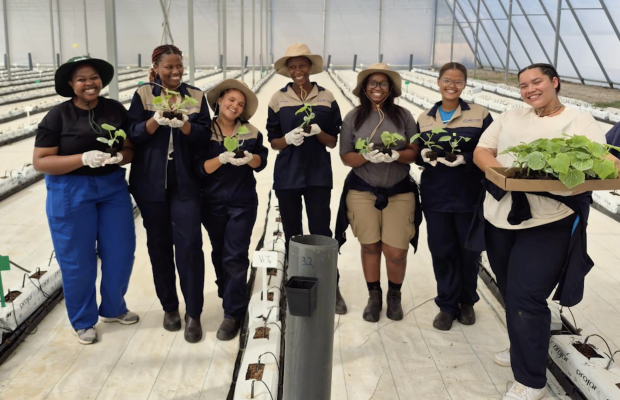
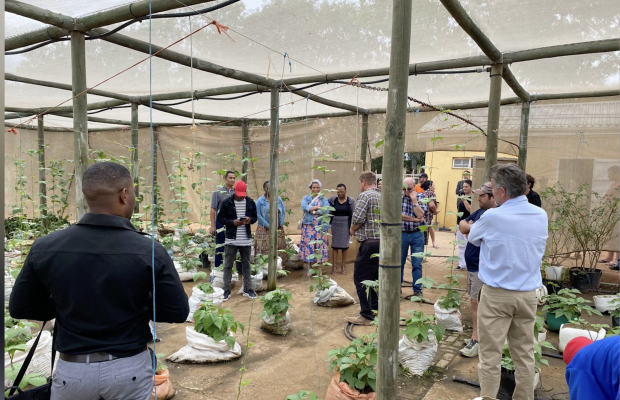
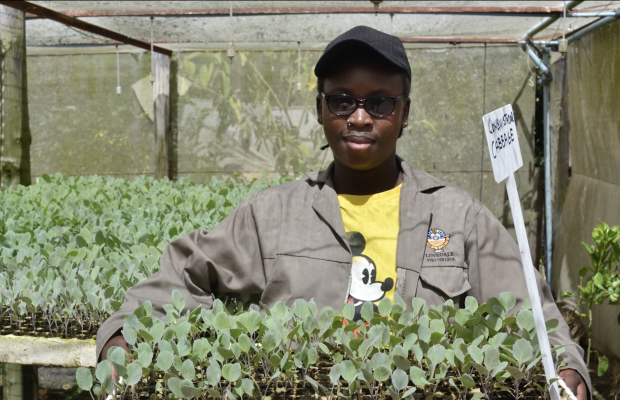
The shift became visible in practical activities across the regions. Boland hosted hands-on workshops on welding and tractor maintenance, facilitated guest lectures from industry bodies such as SAPPO, and introduced drone technology demonstrations for students and farmers. West Coast secured external funding for a 12-month learnership programme and provided computer literacy training tailored to agricultural stakeholders. Lovedale implemented work-integrated learning placements, reaching 57 students across multiple farming systems, and organised business development workshops for emerging farmers.
These initiatives were locally driven. What changed was the colleges’ ability to coordinate stakeholders, design responsive programmes, and align activities with labour-market needs.
Modernising training delivery
Another dimension of the transformation involved how training was delivered. Workshops facilitated in late 2024 introduced Moodle-based course development and interactive digital tools. By early 2025, staff were already applying these methods in collaboration with commercial farmers and agricultural organisations to refine horticultural short courses.
Blended learning approaches, combining online modules with practical, on-site application, expanded access for learners who previously struggled to attend campus-based programmes. Emerging farmers in rural areas, in particular, benefited from more flexible formats.
Rather than replacing traditional teaching, digital tools complemented hands-on agricultural training, helping colleges modernise their way of teaching while maintaining practical relevance.
Foundations for sustainability
As the project approached its conclusion in December 2025, the focus had shifted towards continuity. CoVE action plans have been embedded into institutional strategies, and internationalisation and mobility policies have been aligned with national frameworks.
The long-term impact lies less in individual workshops and more in strengthened institutional capacity. The ability to conduct labour-market analyses, engage industry partners, manage work-based learning and continuously adapt curricula to evolving agricultural practices.
Looking forward
The CoVE South Africa project illustrates how vocational education can evolve when institutional capacity, stakeholder engagement, and curriculum reform are addressed together.
Today, Boland, West Coast, and Lovedale TVETs operate with stronger industry connections, clearer strategic direction, and enhanced confidence in responding to regional agricultural challenges. What began as a project to modernise agricultural training has contributed to a broader repositioning of TVET institutions from classroom-based providers to regional actors supporting climate-smart agriculture and skills development.
This publication was produced with the financial support of the European Union. Views and opinions expressed are however those of the author(s) only and do not necessarily reflect those of the European Union or the European Education and Culture Executive Agency (EACEA). Neither the European Union nor EACEA can be held responsible for them.
Related news
- How Triple Helix Partnerships are strengthening agricultural development in Rwanda
- Center of Vocational Excellence for Climate Smart Agriculture in South Africa
- Building a sustainable future: Insights from MSM's Corporate Social Responsibility Programme