
De-risking requires more than financial guarantees
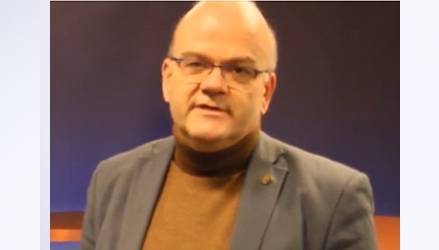
Opinion column by André Dellevoet, MSc/MA
In recent years, the European Commission has frequently used the term “de-risking” in two related meanings: reducing dependence on concentrated or coercive suppliers, and mobilising private capital by reducing investment risks, for example in the framework of the Global Gateway program.
The two are in fact quite different. For example, the reduction of dependencies is a strategic issue that has significant consequences for critical sectors such as the energy transition and defence. Moblising private capital, on the other hand, is largely a question of the expected return on the investment.
According to the IMF, successfully de-risking private investment in regions such as Sub-Saharan Africa requires reducing investors’ actual risks, not merely offering financial guarantees. What matters most is a credible investment environment: macroeconomic stability, sustainable public debt, controlled inflation, predictable regulation, enforceable contracts, independent regulators, and political and security stability. Investors need confidence that licences, tariffs, taxes, property rights, and dispute-resolution mechanisms will remain stable over the life of a project. This kind of investment climate is hard to find and the EU has few effective instruments to improve the situation.
The next requirement is bankability. Projects must have sound technical design, credible demand, adequate preparation, meet environmental and social standards, and—especially in infrastructure—a financially reliable off-taker. As the World Bank has pointed out, many otherwise viable projects fail to be concluded because feasibility studies, land acquisition, permissions, and the structuring of the deal are underestimated in terms of time and costs. Dedicated project-preparation facilities and advisory support therefore matter greatly. In private equity markets, the problem is not the availability of funds, but rather the lack of a high quality pipeline of investment-ready projects.
Financial instruments should then target the specific residual risk. Political-risk insurance and partial-risk guarantees address expropriation, transfer restrictions, and government breach of contract; credit guarantees reduce lender exposure; payment guarantees protect against off-taker default; and local-currency financing reduces dangerous currency mismatches. Blended finance, first-loss capital, and concessional debt can help where markets are thin or technologies are unproven, but they should be catalytic and temporary rather than permanent subsidies. Despite the enormous growth of the African banking sector since the 1990’s, it is striking to see how they have avoided to develop these financial instruments. Investors depend entirely on foreign capital.
Finally, success depends on building local financial markets so firms can borrow in the currency in which they earn, and on avoiding common failures: guarantees without reform, donor-driven pipelines, one-size-fits-all instruments, weak community engagement, and subsidy dependence. In short, the right de-risking formula is: credible institutions + bankable projects + precise risk allocation + targeted, time-limited financial de-risking.
It remains to be seen if the EU handles this formula well. At MSM, we have come to the conclusion that improvements in the investment climate, as well as appropriate and effective technical and financial requirements for increased private sector investments, needs to be stimulated by enhanced local economic governance, actively supported by the EU. An independent management authority needs to be given a specific mandate to develop and apply the de-risking formula in a specific sector or market system. This is the only way to give confidence to the private sector that their investments are secure.
About the author - Drs André Dellevoet
During his international career, spanning 4 decades, Mr. Dellevoet has worked with over 600 companies in Eastern Europe, Asia, and Africa. He joined MSM in 2019.
Disclaimer: The views and opinions expressed in this article are those of the author and do not necessarily reflect the official position of Maastricht School of Management (MSM) or Maastricht University.
More opinion columns:
Opinion column: Sustainability s happening
Opinion column: Do we still need to teach decision-making in the era of A.I?
Opinion column: How to proceed with private sector development?