
Strengthening entrepreneurial universities in Burundi: Round table with academic leaders
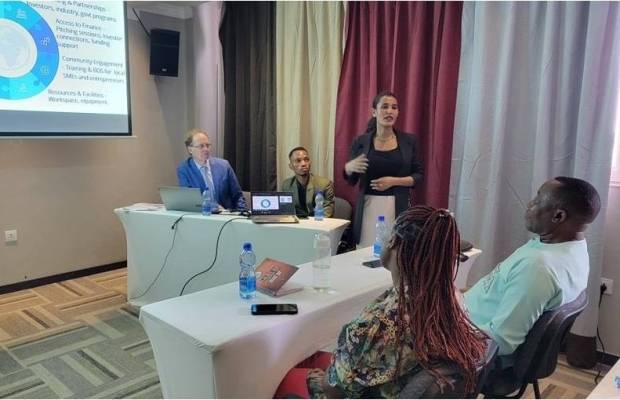
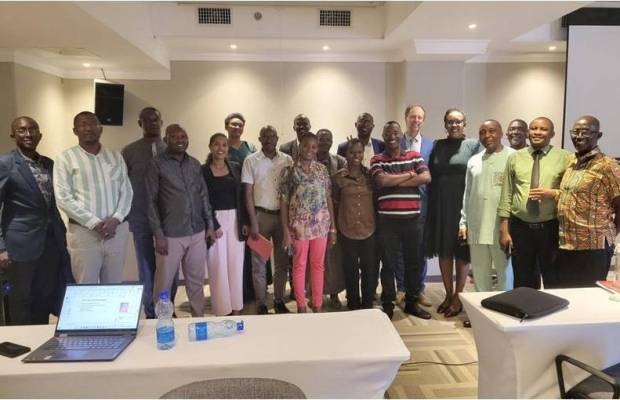
On 17 March 2026, a round table was held at the Kiriri Garden Hotel in Bujumbura, bringing together university leaders to reflect on how higher education institutions can play a stronger role in fostering entrepreneurship in Burundi.
Organised within the framework of the Knowledge 2 Knowledge (K2K) Burundi Project, the meeting gathered rectors, academic directors, and business relations officers from five partner universities: Université du Burundi (UB), Université Lumière de Bujumbura (ULBU), Université de Ngozi (UNG), Hope Africa University (HAU), and Université du Lac Tanganyika (ULT).
Rethinking the role of universities
In a national context marked by high levels of informal employment and limited access to formal job opportunities, discussions focused on a key question: how can universities become drivers of job creation and economic growth?
Participants explored the concept of the entrepreneurial university, which goes beyond traditional teaching by equipping students with practical skills, fostering innovation, and supporting business creation. The shared vision emphasized the need to train graduates who are not only job seekers, but also job creators—capable of identifying opportunities, adapting to change, and taking initiative.
Common challenges and shared opportunities
University representatives openly discussed the challenges they face, including:
- a predominance of theoretical teaching approaches
- limited integration of entrepreneurship into curricula
- weak collaboration with the private sector
- insufficient resources to support entrepreneurial initiatives
At the same time, inspiring examples from international universities, such as Makerere University and Bahir Dar University, demonstrated that transformation is possible. The creation of entrepreneurship and incubation centres was highlighted as a key success factor, enabling practical training, project support, and stronger links with industry.
From reflection to action
The round table also included a self-assessment exercise, where each university identified its strengths, gaps, and opportunities. This practical session encouraged participants to move from discussion to concrete action planning, tailored to their institutional contexts.
Key takeaways
Several important messages emerged from the discussions:
- Transforming universities requires strong leadership and a clear vision
- Entrepreneurship should be integrated across all disciplines, not limited to specific courses
- Partnerships with the private sector are essential to ensure relevance and employability
- Institutional change is a gradual process that requires sustained collaboration
Looking ahead
Participants expressed a strong interest in continuing the momentum through:
- regular online exchanges between universities
- strengthened collaboration with investors and incubators
- continued coaching and technical support
The round table marked an important step in building a shared understanding of the role of universities in Burundi’s economic transformation. As highlighted by participants, there is a clear commitment to move forward and translate these discussions into concrete actions.
The event was facilitated by Dr. Huub Mudde, whose expertise and guidance helped ensure dynamic, practical, and forward-looking discussions throughout the session. It also benefited from the contribution of Ms. Alemfrie Derese, whose presentation further enriched the exchanges and made the discussions engaging and insightful.
This initiative reinforces MSM’s commitment to supporting higher education institutions in developing innovative, entrepreneurial, and impact-driven models.
The project is funded by RVO and is part of the Orange Corners Program. The project is led by MSM in close cooperation with local partners CTJEBU (Chambre Transversale des Jeunes Entrepreneurs du Burundi) and 3HI Africa, both of which bring strong connections to the Burundian entrepreneurship ecosystem. By building institutional and human capacity in higher education, the project aims to transform Burundian universities into engines of innovation and job creation, laying the groundwork for a more inclusive and opportunity-driven entrepreneurial ecosystem.
MSM's Expert Centre on Emerging Economies
This institutional collaboration project is part of MSM's Expert Centre on Emerging Economies. The department is an expert centre on sustainable private sector development in emerging and developing markets. We capacitate managers and professionals from government, private sector, NGOs, and post-secondary education in Africa, Asia, Middle East, and Latin America. We offer consultancy and customized training programs, and we manage complex projects in key sectors, e.g. water, agriculture and health. For more information click here
Related News:
K2K Burundi: Building entrepreneurial universities for a new generation
New K2K project to strengthen entrepreneurship education in Burundi
Successful project kick-off in Burundi to support youth entrepreneurship in the agricultural sector