
Three years of CB-VET Ghana: strengthening agricultural education, entrepreneurship and employability
After three years of collaboration between Ghanaian and European partners, the Erasmus+ CB-VET Ghana project, VET Ecosystems for Employability in Ghana, has successfully concluded with a closing event held from 3 to 5 November 2026 in Kumasi, Ghana. Hosted by Kwadaso Agricultural College (KAC), the event brought together project partners, representatives from government and industry, vocational education and training (VET) staff and students to celebrate the project's achievements and discuss opportunities for continued cooperation.
One of the highlights was the exhibition of student-developed agribusiness products, business pitches and virtual reality (VR) demonstrations. These practical showcases illustrated how the project has contributed to connecting agricultural education more closely with entrepreneurship, innovation and the needs of the labour market.
Coordinated by Maastricht School of Management (MSM), part of Maastricht University, the EU-funded project ran from December 2023 until November 2026. Its main objective was to strengthen agricultural vocational education and training in Ghana, enabling institutions to provide more relevant, practical and innovative education that prepares students for employment and entrepreneurship in a changing agricultural sector.
Building stronger connections between education and industry
Ghana's agricultural sector faces significant challenges, including climate change, changing market demands, post-harvest losses and the need for more sustainable production and processing methods. Addressing these challenges requires not only new technologies, but also a skilled workforce capable of applying them.
The CB-VET Ghana project was established to support this development by strengthening the capacities of agricultural VET institutions, particularly Kwadaso Agricultural College (KAC) and Adidome Farm Institute (AFI).
Rather than focusing exclusively on classroom training, the project introduced an entrepreneurial VET ecosystem approach. This approach brings together educational institutions, private businesses, government agencies and civil society organisations to jointly identify skills needs, develop relevant training and create better opportunities for students.
During the first year, extensive research and stakeholder consultations were conducted to understand existing gaps between agricultural education and labour market needs. These included a baseline survey involving 137 students, institutional capacity assessments and consultations with 45 agribusinesses and market actors.
The findings highlighted the importance of more practical and industry-oriented training, stronger digital teaching capacity, improved entrepreneurship education and closer connections between VET institutions and employers.
These findings guided the development of the project's training activities and educational resources throughout the following years.
An important early achievement was the establishment of working groups bringing together VET staff, industry representatives and other stakeholders. These groups provided a basis for cooperation, knowledge exchange and the joint development of activities responding to local agricultural needs.
Strengthening the capacities of VET staff and institutions
A central part of the project was a comprehensive Training of Trainers (ToT) programme, developed and delivered by the Ghanaian and European project partners.
The training activities addressed topics ranging from ecosystem management and industry collaboration to curriculum development, innovative teaching methods, digital learning, entrepreneurship and institutional management.
The intention was not only to strengthen the knowledge and skills of individual staff members, but also to enable participating institutions to apply these approaches in their daily operations and share their knowledge with colleagues.
For example, training on entrepreneurial VET ecosystems brought together 37 participants and resulted in four actionable project plans. Participants worked on stakeholder mapping, identifying institutional priorities and developing practical initiatives to improve cooperation with industry.
Building on this foundation, a further training programme in March 2026 focused on institutional sustainability and the development of viable services for local agricultural stakeholders. Using the Business Model Canvas, participants developed business models and plans for potential income-generating services, including activities related to artificial pollination, vegetable production and catfish farming.
These activities supported a broader shift in the role of VET institutions: from primarily delivering education to becoming more active partners in local economic development.
Developing new short courses and innovative learning methods
One of the project's major achievements was the development of 11 blended-learning short courses, designed to respond to identified skills gaps in Ghana's agricultural sector.
Developed in cooperation with VET staff and industry representatives, the courses cover topics such as food safety and quality control, food packaging, post-harvest loss management, agribusiness and entrepreneurship, aquaculture, poultry management, climate-smart farming and circular economy practices.
The courses were designed with a strong practical orientation, combining approximately 70% applied learning with 30% theoretical content. They provide KAC and AFI with new training materials that can be used and adapted for students, farmers, agribusiness professionals and other learners.
Digital education was another important focus. Through the project, 22 online courses were made available on MSM's Moodle learning platform, accompanied by training to strengthen the digital teaching capacities of VET staff.
In August 2025, MSM organised a practical training programme at KAC, supporting participants from both colleges in using the platform, facilitating online learning and exploring how digital tools could be integrated into their existing teaching practices.
The project also introduced virtual reality as an additional tool for practical agricultural education. Three immersive VR learning scenarios were developed, and VET staff received training in creating and using VR-supported learning activities.
Together, these developments have provided the participating institutions with a wider range of educational resources and new possibilities for combining classroom instruction, digital education and practical skills development.
Bringing students closer to employment and entrepreneurship
Strengthening the connection between education and employment was another key priority.
Through the project, partners worked on developing more structured internship and apprenticeship approaches to help students gain practical experience in real working environments. Four draft internship models were developed, alongside a Career Development Centre plan intended to strengthen career guidance, employer connections and opportunities for work-based learning.
Entrepreneurship also became an important area of practical application.
In 2026, KAC students participated in an extensive entrepreneurship and business incubation programme, implemented through complementary activities of CB-VET Ghana and the ATVET Connect Ghana project. Between March and June alone, more than 340 students participated in a programme that challenged them to identify market opportunities, develop business ideas and turn these into tangible products.
Working in teams, students gained practical experience in market research, product development, costing, branding, packaging and pitching their ideas to potential business partners.
The results included a range of processed agricultural products, such as plantain flour, cassava biscuits and other value-added food products. These were presented to industry representatives and evaluators, giving students the opportunity to receive feedback on the commercial potential of their ideas.
This practical entrepreneurship trajectory demonstrated the value of connecting vocational education with real market challenges and opportunities for self-employment.
Positive results from the final impact assessment
Towards the end of the project, a final impact assessment was conducted to evaluate how the activities had contributed to the professional capacities and practices of participating VET staff and stakeholders. The assessment, carried out in October 2026, gathered responses from 40 participants, primarily from KAC and AFI. The findings were encouraging:
- 98% of respondents indicated that they had applied knowledge, skills or approaches gained through the project in their professional practice.
- 90% reported that their professional capacities had improved to a large or very large extent.
- 95% reported strong competencies in practical and innovative teaching and in supporting work-based learning.
- 75% indicated that they were using digital or blended-learning methods in their work.
- 90% expected to continue using the knowledge and approaches gained through the project.
Although these findings are based on participants' self-reported experiences, they provide positive indications that the capacity-building activities have contributed to changes in teaching practices, institutional capacities and cooperation with industry.
The longer-term effects on graduate employment and institutional development will become clearer as the participating institutions continue applying and further developing the project's results.
A successful closing event showcasing three years of collaboration
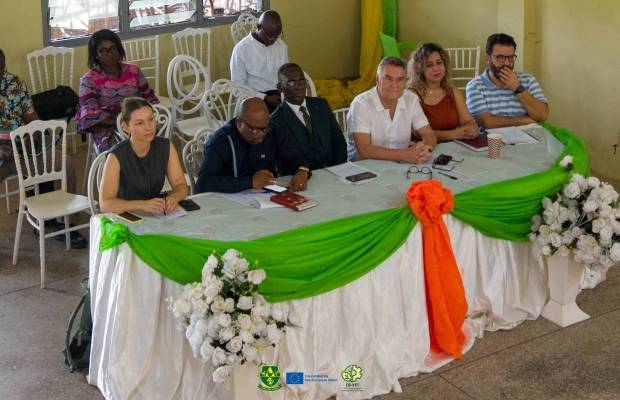
The project's achievements were celebrated during the closing week held at Kwadaso Agricultural College in Kumasi. On 3 November, project partners came together to review the main results, reflect on lessons learned and discuss the sustainability of the developed outputs.
The official closing ceremony on 4 November brought together representatives from the participating institutions, project partners, government and the agricultural sector.
During the ceremony, presentations highlighted the importance of stronger industry-education collaboration, innovative training approaches and entrepreneurship in preparing Ghanaian students for the changing agricultural labour market.
Representing MSM, Senior Project Consultant Hans Nijhoff presented the project's achievements and emphasised the importance of linking education with private-sector needs and developments in climate-smart agriculture.
Other contributions included presentations from CINOP and the American Farm School, highlighting entrepreneurial VET approaches, ecosystem development and innovative education.
The keynote address was delivered by Dr. David Anambam, Ashanti Regional Director of the Ministry of Food and Agriculture. He highlighted the increasing demands on Ghana's agricultural sector and the need for graduates who can respond to new technologies, changing market conditions and sustainable production challenges.
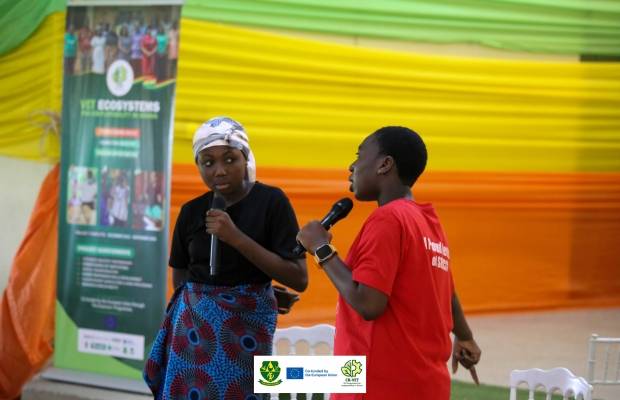
A major highlight of the closing ceremony was the student product exhibition and business pitch competition. KAC students presented their agribusiness concepts, processed food products, innovative solutions and business ideas to participants and stakeholders.
The exhibition demonstrated the practical and entrepreneurial skills students had developed, while also providing opportunities to receive feedback, strengthen professional connections and explore further business development. Visitors were also introduced to the project's VR learning applications, demonstrating how innovative technologies can support agricultural education.
The closing week concluded on 5 November with further partner discussions on sustainability, remaining project activities and opportunities for continued collaboration.
Building on the achievements beyond the project
While CB-VET Ghana has reached the end of its three-year implementation period, the closing discussions emphasised the importance of ensuring that the achievements continue to benefit the participating institutions and their stakeholders. The newly developed short courses, digital resources, VR learning scenarios and work-based learning approaches provide a foundation for further improvements in agricultural vocational education.
The next challenge will be to embed these resources within institutional teaching practices, maintain active cooperation with industry and explore opportunities to expand the approaches to other VET institutions and regions in Ghana. Partners also discussed possible new collaborative initiatives that could build on the experience and relationships established through the project.
Continued institutional commitment, access to appropriate resources and cooperation with public and private stakeholders will be important in translating the project's achievements into lasting benefits for students and the agricultural sector.
Three years of partnership between Ghana and Europe
The CB-VET Ghana project was made possible through close cooperation between partners from Ghana, the Netherlands and Greece, bringing together expertise in vocational education, higher education, agricultural production, private sector development and social inclusion. The partnership consisted of:
- Maastricht School of Management (MSM), Maastricht University, the Netherlands, responsible for overall project coordination and contributing expertise in capacity building, ecosystem development, management and digital education.
- CINOP, the Netherlands, contributing expertise in vocational education, entrepreneurial VET ecosystems, industry collaboration and work-based learning.
- American Farm School (AFS), Greece, supporting the development of innovative agricultural education and industry-relevant training.
- Kwame Nkrumah University of Science and Technology (KNUST), Ghana, contributing academic expertise, research and curriculum development.
- Bunash Enterprise & Farms (BE&F), Ghana, supporting project implementation, industry engagement and local coordination.
- Rights and Advocacy Initiatives Network (RAIN), Ghana, contributing expertise in social inclusion, community engagement and career development.
- Kwadaso Agricultural College (KAC) and Adidome Farm Institute (AFI), Ghana, the two agricultural VET institutions at the centre of the project's capacity-building activities.
The project also benefited from the engagement of public and private stakeholders, including the Ministry of Food and Agriculture, the Commission for Technical and Vocational Education and Training, agricultural businesses and other educational institutions.
MSM would like to thank all project partners, participating trainers, students and stakeholders for their commitment and contributions throughout the three years. The successful closing event demonstrated the results of this collaboration, particularly through the practical achievements of the students and the new capacities developed within the participating institutions.
Although the project has officially concluded, the knowledge, educational resources and partnerships established through CB-VET Ghana provide a valuable basis for continued cooperation and the further development of agricultural vocational education in Ghana.
MSM's Expert Centre on Emerging Economies
This institutional collaboration project is part of MSM's Expert Centre on Emerging Economies. The department is an expert centre on sustainable private sector development in emerging and developing markets. We capacitate managers and professionals from government, private sector, NGOs, and post-secondary education in Africa, Asia, Middle East, and Latin America. We offer consultancy and customized training programs, and we manage complex projects in key sectors, e.g. water, agriculture and health. For more information click here.
This publication was produced with the financial support of the European Union. Views and opinions expressed are those of the author(s) only and do not necessarily reflect those of the European Union or the European Education and Culture Executive Agency (EACEA). Neither the European Union nor EACEA can be held responsible for them.