
Shaping the Future Green Economy: Key Insights from the MSM–Nanjing University Academic Conference
On Thursday 21 May 2026, MSM together with its long-term partner Nanjing University hosted a successful online Academic Conference on the theme of Green Economy: Sustainable Solutions for Business, Management, and Economics. The event featured insightful keynotes and more than 30 paper presentations divided over the six conference subthemes.
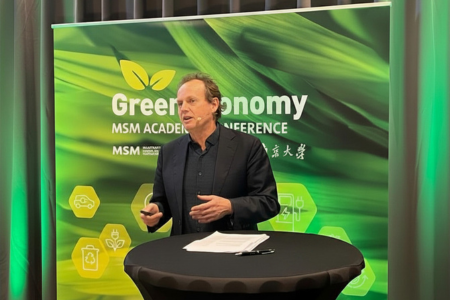
In his opening remarks, Dr. Diederik de Boer, MSM Director a.i., highlighted the continued momentum of the green economy, emphasising that sustainability, digitalisation, and geopolitics are increasingly shaping sustainable development worldwide. He underlined how technological innovation and digital solutions are accelerating green transformation across sectors, while stressing the importance of collaboration and knowledge exchange in building a more sustainable and inclusive future. Reflecting on the longstanding partnership between MSM and Nanjing University, he highlighted its role in fostering international collaboration and strengthening academic exchange.
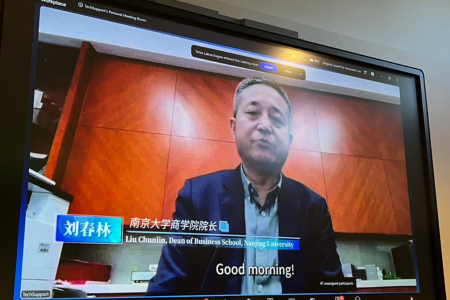
In his welcome address, Prof. Liu Chunlin emphasised that the green economy is no longer a future aspiration but an increasingly important reality shaping business and society. He highlighted the growing integration of sustainability into management, education, and research, stressing the importance of academic research and international collaboration in addressing global challenges and advancing sustainable development.
He also reflected on the longstanding cooperation between Nanjing University and MSM as a strong foundation for continued knowledge exchange and innovation.
It’s much more than just ‘green’
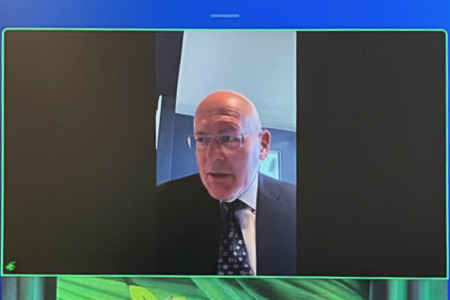
In his keynote address, Frans Timmermans argued that the transition to a green economy is about far more than environmental sustainability alone.
Drawing on his experience leading the European Green Deal, he explained how climate policy is increasingly intertwined with economic competitiveness, energy security, technological innovation, and geopolitics.
He emphasised that reducing dependence on fossil fuels is not only necessary to address climate change, but also strengthens economic resilience and strategic autonomy.
Mr. Timmermans highlighted the crucial role of investment, innovation, renewable energy, and emerging technologies in driving this transition, while stressing the need for international cooperation and inclusive policies that ensure a just transition for businesses and citizens alike.
He concluded that the green transition should be viewed not as a constraint, but as an opportunity to build a more sustainable, secure, and prosperous future.
To watch the full keynote speech, click here.
Green Economy, Corporate Management and Human Capital: Strategies and Practice
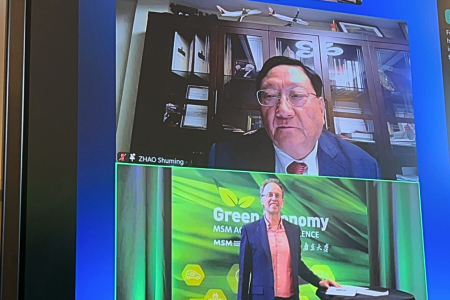
In his keynote address, Dr. Shuming Zhao explored how organisations can successfully navigate the transition to a green economy. He highlighted the growing influence of major policy frameworks, including the European Green Deal, China’s Dual Carbon Goals, and the U.S. Inflation Reduction Act, while emphasising that businesses must adapt to evolving sustainability requirements and stakeholder expectations.
Dr. Zhao discussed key challenges facing organisations, including green skills shortages, technology adoption costs, supply chain transformation, and increasing regulatory demands.
Drawing on examples from leading Chinese companies, he argued that long-term success in the green economy requires investment in innovation, talent development, and organisational transformation. He concluded by presenting a framework centred on green human capital, entrepreneurial innovation, and organisational capabilities as essential pillars for achieving sustainable and competitive growth in the years ahead.
To watch the full keynote speech, click here.
Paper presentations
Throughout the day, the paper submitters presented their research across six subthemes reflecting the diverse dimensions of the green economy transition. The paper presentations brought together perspectives from academia and practice, addressing topics ranging from sustainable business models and green finance to policy innovation, digital transformation, and behavioural change. Together, the sessions provided a platform for knowledge exchange and discussion on how organisations, governments, and societies can advance more sustainable and inclusive development.
Corporate Sustainability and Green Innovation
Presentations within this theme explored how sustainability can be embedded into business strategy, entrepreneurship, and organisational structures. Research addressed topics including circular economy practices, sustainability-oriented innovation, responsible business approaches, and green entrepreneurship in both developed and emerging economies. Particular attention was given to how organisations can create environmental and social value while overcoming barriers to implementing sustainable practices across sectors such as agriculture, mining, and waste management.
Green Finance and Investment
This theme highlighted the evolving role of finance in supporting sustainable economic transformation. Presentations examined innovative financing mechanisms for the green transition, including carbon markets, decentralised finance and crowdfunding models, as well as sustainable investment strategies and renewable energy markets. Discussions also explored ESG-related investor behaviour, institutional drivers of sustainability performance, and challenges in implementing green finance frameworks across different regions.
Sustainable Supply Chain Management
Research presented under this theme focused on building more resilient, transparent, and environmentally responsible supply chains. Topics ranged from sustainable agricultural exports and regulatory requirements in international trade to emerging developments such as digital product passports and verification systems. The presentations highlighted how sustainability considerations are increasingly shaping competitiveness, compliance, and supply chain innovation.
Public Policy and Regulation for Green Growth
This theme examined the critical role of policy and governance in accelerating sustainable development. Presentations explored green fiscal and monetary instruments, environmental taxation, international policy comparisons, and regional development strategies. Discussions also addressed broader themes such as sustainable infrastructure, innovation ecosystems, education, and inclusive approaches that support climate-smart and long-term economic transformation.
Green Technology and Digital Transformation
Presenters within this track demonstrated how technology and innovation can act as drivers of the green economy transition. Topics included digital solutions for environmental governance, technological transformation in industries such as construction, climate-smart skills development, and entrepreneurial initiatives integrating sustainability and innovation. The papers highlighted the growing importance of technological capabilities in enabling sustainable and inclusive development.
Behavioural Economics and Consumer Preferences
Research in this theme focused on the human and behavioural dimensions of sustainability. Presentations examined how beliefs, consumer behaviour, communication strategies, and social influence shape sustainable choices. Discussions addressed topics such as green marketing, sustainable consumption patterns, behavioural barriers to adoption, and inclusive entrepreneurship, demonstrating the importance of understanding human decision-making in advancing sustainable economic change.
Looking ahead: reflections on the green economy transition
In his closing remarks, Prof. Harald Sander, Professor in Economics and International Economics, reflected on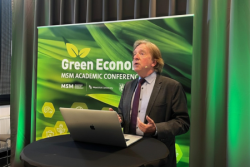
Summarising the day through five key takeaways, he highlighted that sustainability and competitiveness can reinforce one another, while acknowledging that the transition toward a greener economy requires carefully managed trade-offs and supportive policies.
He further stressed the importance of green innovation and enabling ecosystems, and underlined the significant role emerging and developing economies play in driving sustainable transformation through entrepreneurship, innovation and new opportunities for growth.
Lastly, Dr. Diederik de Boer concluded the conference by expressing a heartfelt thank you to everyone who contributed to make this Academic Conference a successful, insightful and inspiring event.
Thank you to all who made this MSM-Naning University Academic Conference a success!