
Erasmus+ Mobility to Greece Showcases Climate-Smart Agriculture and Innovation Ecosystems
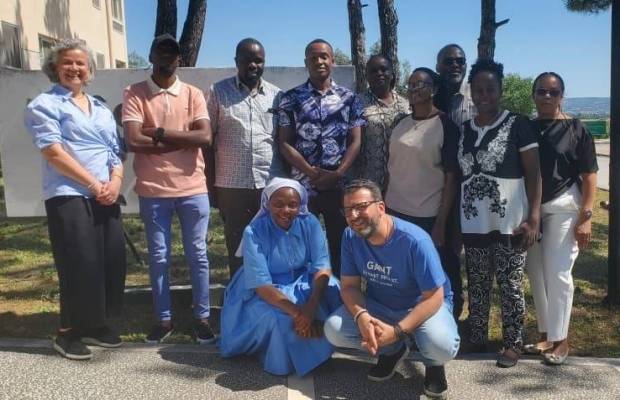
From 25 to 30 May 2026, partners of the Erasmus+ Capacity Building in Vocational Education and Training project “Building Inclusive Centres of Vocational Excellence for Skills and Employment Development in the Climate-Smart Agriculture (CSA) Sector,” coordinated by MSM-UM, participated in a study visit to Thessaloniki, Greece. The mobility was hosted by the Greek partner American Farm School (AFS) and aimed to expose participants to innovative examples of climate-smart agriculture, ecosystem development, public-private collaboration, and skills development models that can support the establishment and sustainability of the CSA hubs develop by the participating TVET institutions in Tanzania.
The delegation included (additionally to AFS) the representatives from the National Council for Technical and Vocational Education and Training (NACTVET), Kilimanjaro Agricultural Training Centre (KATC), MATI Mlingano, Kilacha Agricultural & Livestock Training Centre (KALTC), Mt Maria Goretti Agriculture Training Institute (MGATI), Profyta/GVA, and Maastricht School of Management – Maastricht University (MSM-UM).
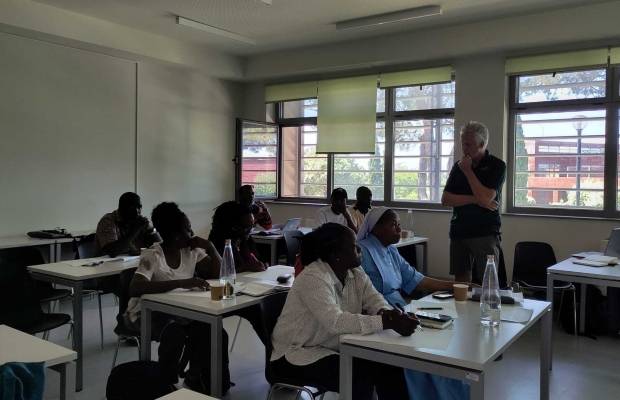
Throughout the week, participants engaged in workshops, technical presentations, field visits, and strategic discussions focused on the development and sustainability of Climate-Smart Agriculture (CSA) hubs.
A highlight of the programme was a visit to the AFS Climate-Smart Autonomous Greenhouse, where participants explored advanced automation technologies, environmental control systems, and data-driven climate management solutions. The greenhouse demonstrated how controlled-environment agriculture can improve productivity while increasing resource efficiency and reducing the use of water and energy. The delegation also visited the Balauras Brothers Kiwifruit Orchard in Agios Spyridon, a leading example of precision agriculture in practice. Through its collaboration with AFS, the orchard has adopted smart farming technologies that support microclimate monitoring, irrigation management, and efficient use of agricultural inputs. Participants gained valuable insights into how digital technologies can improve productivity, product quality, and environmental sustainability.
Another important visit took place at Ergoplanning, where participants learned about the development of an innovative Agrifood Hub that connects producers, agritech companies, processors, and other stakeholders. Discussions focused on collaborative solutions, circular economy approaches, and supply-chain innovation as drivers of sustainable agricultural development.
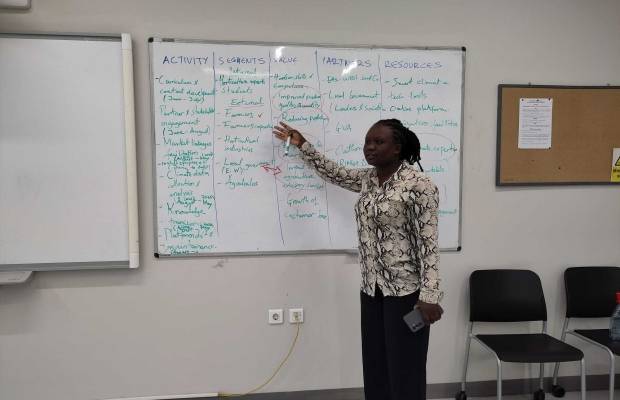
Beyond the technical visits, participants exchanged experiences on ecosystem governance, stakeholder engagement, and strategies for building sustainable CSA hubs. The final days included a dedicated workshop on leadership and institutional development to encourage reflection on the skills and capacities needed to foster innovation and effective multi-stakeholder collaboration.
Building on the lessons learned during the mobility, the participating TVET institutions worked on preliminary road maps for establishing and sustaining CSA hubs. The road maps identified priority actions, stakeholder engagement strategies, governance arrangements, and service portfolios, with a strong focus on creating sustainable and replicable models that can be scaled across the country.
Special thanks to all participants, the American Farm School (AFS), the host companies, and all partners for their active engagement, collaboration, and valuable contributions throughout the week. Their commitment and knowledge sharing were essential to the success of the visit and highly inspiring for future collaboration and the continued strengthening of the consortium.
This publication was produced with the financial support of the European Union. Views and opinions expressed are however those of the author(s) only and do not necessarily reflect those of the European Union or the European Education and Culture Executive Agency (EACEA). Neither the European Union nor EACEA can be held responsible for them.

MSM's Expert Centre on Emerging Economies
This institutional collaboration project is part of MSM's Expert Centre on Emerging Economies. The department is an expert centre on sustainable private sector development in emerging and developing markets. We capacitate managers and professionals from government, private sector, NGOs, and post-secondary education in Africa, Asia, Middle East, and Latin America. We offer consultancy and customized training programs, and we manage complex projects in key sectors, e.g. water, agriculture and health. For more information, click here
Related news
Building TVET capacity and student skills to support Climate-Smart Agriculture in Tanzania
Kick-Off Week: Strengthening Vocational Excellence for Climate-Smart Agriculture in Tanzania