
A sneak peek in the life of full-time MBA alumna Beverly Best
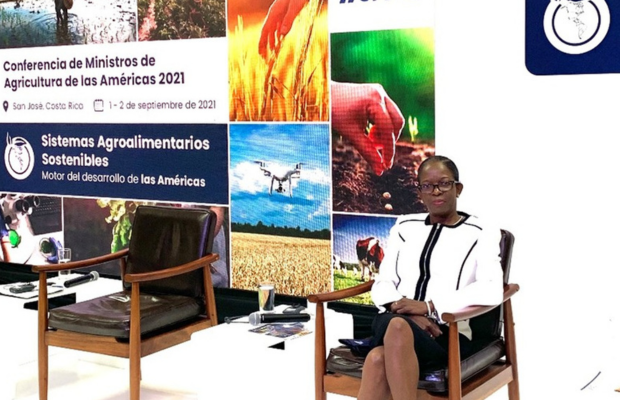
My name is Beverly Best. I was “born and bred” in the twin-island Republic of Trinidad & Tobago, the southernmost island of the Caribbean archipelago and currently work and live in Costa Rica. I am part of the 2015-2016 cohort of the MSM Full-time MBA shaped not only by lectures, case studies and examinations, but by the transformative moments that included collaboration among students, lecturers and university personnel across several cultures as well as lessons in navigating a changing academic and global environment.
As a 2016 MSM Full-time MBA graduate I have since pursued further studies in Evidence-Based Policy Research Methods (EPRM) with Maastricht University, and a PhD programme with the University of Strathclyde, Glasgow, Scotland. In my leisure time, I am a youth mentor, an ardent sports enthusiast (football, cricket and lawn tennis), musician (guitar, saxophone and steelpan), and outdoor adventurer.
Why did you decide to pursue a Full-time MBA?
After obtaining an MSc. Degree in Project Management and working in an international organisation for more than 13 years, I decided to pause in order to pursue a full-time MBA because I wanted to be intentional in enhancing my growth and development - both professionally and personally. At that point in my career, I had gained valuable experience, but I was looking for a more structured way to strengthen my strategic thinking, deepen my understanding of organisational behaviour and expand my perspective beyond my immediate environment.
In this regard, I was convinced that a full-time MBA offered the unique opportunity to fully immerse myself in a rigorous learning experience, collaborate with diverse peers, and challenge my assumptions in ways that part-time or on-the-job learning simply would not match.
The full-time MBA programme gave me the space to reflect on my career direction and to redefine my goals with greater clarity and purpose. In effect, I saw it not simply as an academic pursuit, but as an investment in becoming a more adaptable, thoughtful, and globally minded professional - someone who is better equipped to navigate complexity, lead with intention and create meaningful impact to society.
Why did you decide to pursue a Full-time MBA at Maastricht School of Management?
After evaluating various alternatives, I chose to enrol in the full-time MBA programme at Maastricht School of Management (MSM), seeking not only an additional academic qualification, but also a fresh perspective on business and leadership.
MSM stood out to me as a place where business education goes beyond theory and into real-world complexity. Its deeply international environment meant I would not just study global business but that I would experience firsthand learning alongside other professionals from diverse cultures, industries, and viewpoints.
Prospects of this type of exposure was important for me since I wanted to challenge my assumptions, broaden my thinking, and become more adaptable in an increasingly interconnected world. Equally attractive was MSM’s emphasis on responsible leadership, innovation and sustainable development. I was drawn to the business notion upheld by MSM that success in business is not measured solely by profit, but by impact. I wanted to be part of a programme that encouraged critical thinking about the role of business in society and that pushed me to lead with both strategy and integrity.
Based on the forgoing, choosing MSM was ultimately a decision to step out of my comfort zone and into an environment that would stretch me intellectually and personally. It was not just about advancing my career - it was about redefining how I approach challenges, make decisions, and contribute meaningfully in a global context.
Looking back on my time at MSM…
Some of my fondest memories at MSM did not just come from the lecture halls but were also tied to the moments where the diversity of the cohort truly came to life. We did not just study alongside each other, but we celebrated with each other. For example, birthdays of classmates became shared milestones, marked by laughter, improvised gatherings, and a sense of belonging far from home. Even more meaningful were the cultural and religious celebrations – those moments when classmates opened a window into their traditions, whether through food, stories, or rituals. What might have been unfamiliar at first, quickly became something we all looked forward to. In retrospect, those celebrations were more than simple social events. They were reminders that leadership and global understanding begin with genuine human connection which is something no textbook could ever fully teach.
Further, living in Maastricht added to that experience. The city itself, with its charm and intimacy, became the backdrop for these shared moments - small celebrations that carried a much larger meaning. In those instances, the idea of “international exposure” stopped being an abstract concept and became something deeply personal.
Studying abroad was both enriching and affirming, especially since it was not my first international academic experience, having previously studied in Manchester, England for an MSc. Degree in Project Management. Building on that earlier exposure, I was able to adapt more quickly and engage more deeply, academically, professionally, and culturally. What stood out most was the diversity of perspectives in the classroom at MSM, which challenged my assumptions and strengthened my ability to think critically and work across cultures. It also enhanced my independence, resilience, and global outlook.
Can you tell something about your career path? Including your current job role/tasks and the company you work for. What was the process of securing your current position?
My career path has been shaped by a strong interest in building partnerships and navigating the intersections between institutions, policy, and development to deliver impactful results. I began my professional journey in roles such as Research Officer, Project Analyst, Economist and Management that allowed me to develop a solid foundation in stakeholder engagement and strategic communication, and gradually moving into positions offering greater regional and international exposure. Over time, I became increasingly drawn to work related to Programme Management, Functional and Development Cooperation that connects organisations, governments, and communities around shared goals.
Currently, I serve as Director of External & Institutional Relations at the Inter-American Institute for Cooperation on Agriculture (IICA) in Costa Rica. In this role, I lead efforts to strengthen strategic alliances with governments, international organisations, and key stakeholders across the Americas and globally. My work involves shaping institutional positioning, fostering collaboration, and supporting initiatives that advance sustainable agricultural development in the Americas. It is a role that requires both strategic vision and the ability to navigate complex, multi-stakeholder environments.
How do you feel your Full-time MBA at MSM has helped you prepare for your career?
The MBA experience at MSM has been transformative for my career. Beyond the enhanced technical skills in understanding business fundamental, the programme challenged me to think more critically and strategically. Moreover, it enhanced my leadership and adaptability, particularly through group work and exposure to international perspectives.
Overall, the MSM Full-time MBA has prepared me to manage complexity and navigate dynamic professional environments with confidence and a global mind set.
Are there any specific skills or lessons learned during your time as a student that you find particularly valuable in your professional or personal life?
Though there are various, the most valuable skills I developed were critical thinking, teamwork, and adaptability. Through group assignments, I also strengthened my capacity for collaboration, my ability to approach problems from multiple perspectives and my communication skills, particularly in diverse teams. These skills have helped me navigate complex environments, work more effectively with others, and remain flexible in the face of changes.
The benefits go beyond my professional life as the full time MBA helped me to develop discipline, adaptability, and a global perspective, which influence how I approach both work and personal challenges. It has shaped the way I think, plan, and interact with others.
How did the Career and Personal Development Track (CPDT) contribute to your development, both personally and professionally?
The CPDT at MSM went beyond traditional career support and offered a process that allowed for continuous self-reflection and development during my MBA studies. Rather than focusing only on readiness for the job market at the end of the programme, it also guided me step by step in understanding and reflecting on who I am as a professional, how I operate in teams, and how my personal values align with my career choices.
The combination of mentoring and practical career tools created a highly personalised learning experience that complemented the academic side of the MBA.
What I found particularly unique was the emphasis on long-term professional identity and adaptability, which helped me to prepare for my next role as Head of a newly established unit with my previous employer, as well as build the confidence and awareness needed to navigate an evolving career path which has since mushroomed in my current employment with a dynamic and influential international organisation - IICA - headquartered in Costa Rica in Central America.
What more would you like to accomplish in the future? Would you have an ultimate dream or goal for the future?
From a general career standpoint, I would like to continue growing professionally, where I can contribute strategically and create meaningful impact. My long-term goal is to drive initiatives that are circumscribed by sustainable development and innovation, particularly in areas that improve livelihoods and create inclusive opportunities that ultimately leave a positive and lasting impact on people, particularly in the Caribbean region.
Further, having completed a PhD degree, in the future, I would like to continue contributing to generating evidence-based insights on entrepreneurship, with a particular focus on women in the Caribbean region - of the Global South, who are operating in the digital environment. I believe this work will add to the body of knowledge on entrepreneurship and broaden scholarly perspectives that help shape more inclusive policies and institutional strategies that support gendered contextual realities in developing countries. At the same time, I intend to adopt a collaborative approach between academia, industry, and development partnerships, so that my research can ultimately translate into meaningful, real-world impact.
What advice would you give current or future Full-time MBA students?
My main advice to current and future Full-time MBA students is to be intentional and proactive in your approach to the programme by going beyond coursework and actively seek opportunities to apply learning, build meaningful relationships, and step outside your comfort zone. Engage with diverse peers, since a lot of the learning come from shared experiences and different perspectives. At the same time, take ownership of your career path early by using projects and networking opportunities to refine your goals and gain clarity. Finally, stay adaptable and focus on developing transferable skills such as critical thinking, communication, and leadership. I have experienced that these remain valuable in any career path and support long-term professional growth.
Do you also want to join the full-time MBA and develop your management skills in a diverse, international and multicultural environment? Click here for more information about the programme, the curriculum, the available scholarships and the admission requirements. You can also chat with current students and alumni and get first-hand insights in how they have experienced the programme. The next intake will start in September 2026. Or get in touch with Inka Diddens at inka.diddens@maastrichtuniversity.nl if you have any further questions.
Publications:
Best, B. (2025) “Exploring Diversity of Female Digital Entrepreneurship: Towards Resilience in the Caribbean Context”. In: Lassalle, P and Yamamura , S. (eds.) Research Handbook on Entrepreneurship and Diversity. pp. 313-336.
https://www.elgaronline.com/edcollbook/book/9781803924151/9781803924151.xml
Best, B., Lassalle, P. and Nicolopoulou, K. (2024) 'Unlocking the “SHERO” within: an exploration of how female entrepreneurs in the Caribbean use digital technologies for business transformation'. International Journal of Gender and Entrepreneurship, 17 (1), pp. 65-93. https://doi.org/10.1108/IJGE-03-2024-0093
Best, B. et al. (2024) 'Reflections and perspectives on accessing informal finance and social capital'. Emerging Markets Case Studies, 14 (1), pp. 1-7. https://doi.org/10.1108/EEMCS-01-2023-0011.
*The content of this blog reflects the personal experiences of the alumna and is not affiliated with the Inter-American Institute for Cooperation on Agriculture.